Doing what we can!
Phew. Y’all, for me August is such a shock to my system. Going from relaxing and having time to let my brain shut off to waking up early, making thousands of decisions, and being on high alert is so physically and mentally exhausting.
I enjoy the routine and coming back to work, but my body just hasn’t caught up yet. I think that’s ok. I’m waiting until September to see if I get settled.
What I really wanted to write about this month was my experience at Imani Black Studios, located in the heart of Deep Ellum. The exhibit displayed at the studio was called What Is Home?, featuring Willie Baronet and Leah den Bok.
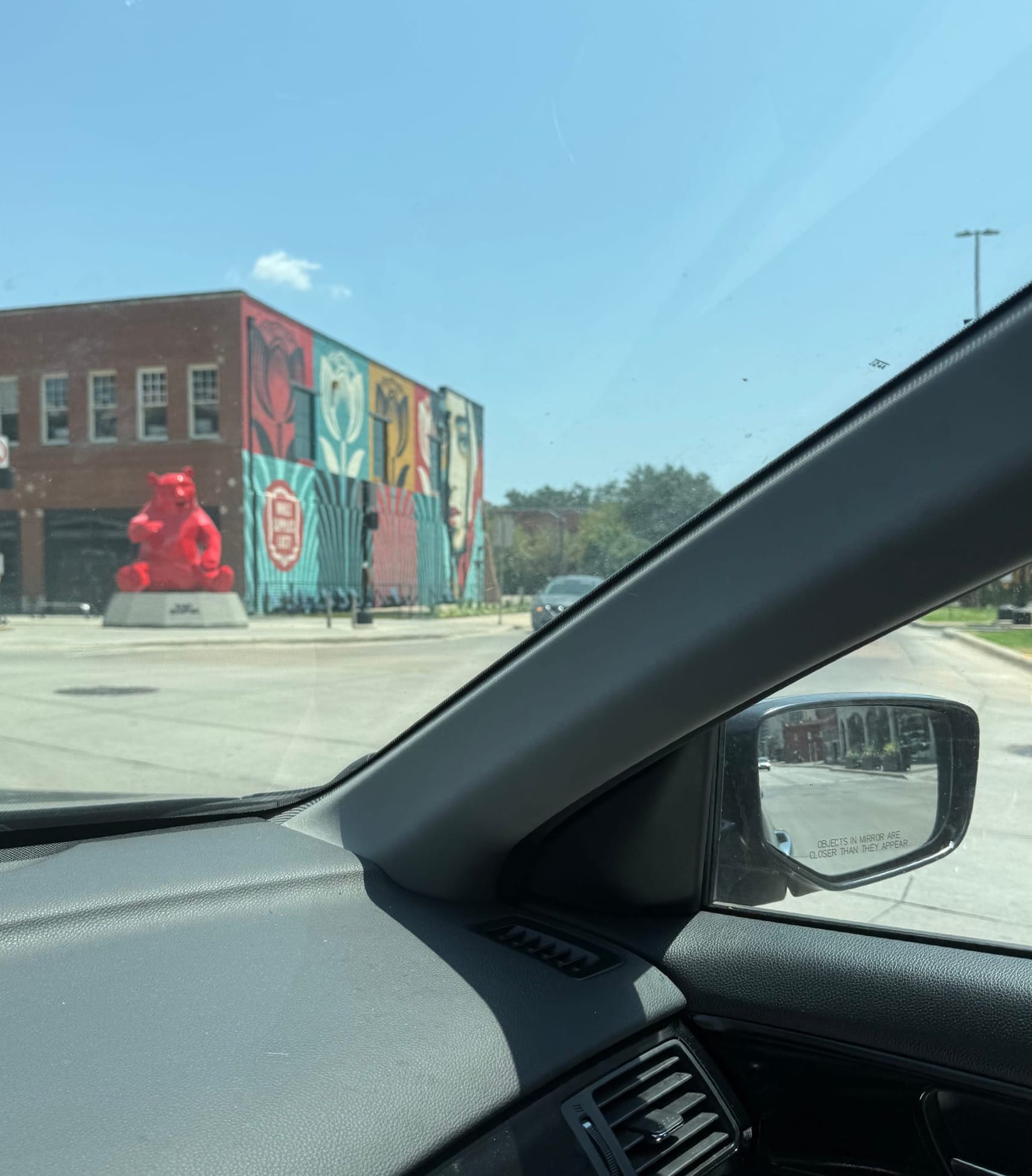
On a hot Sunday afternoon, I found myself walking into the fresh, beautiful studio. It’s a wonderful space.
As I entered, I was instantly struck by the many signs hanging from the ceiling, easily recognizable as panhandling signs.
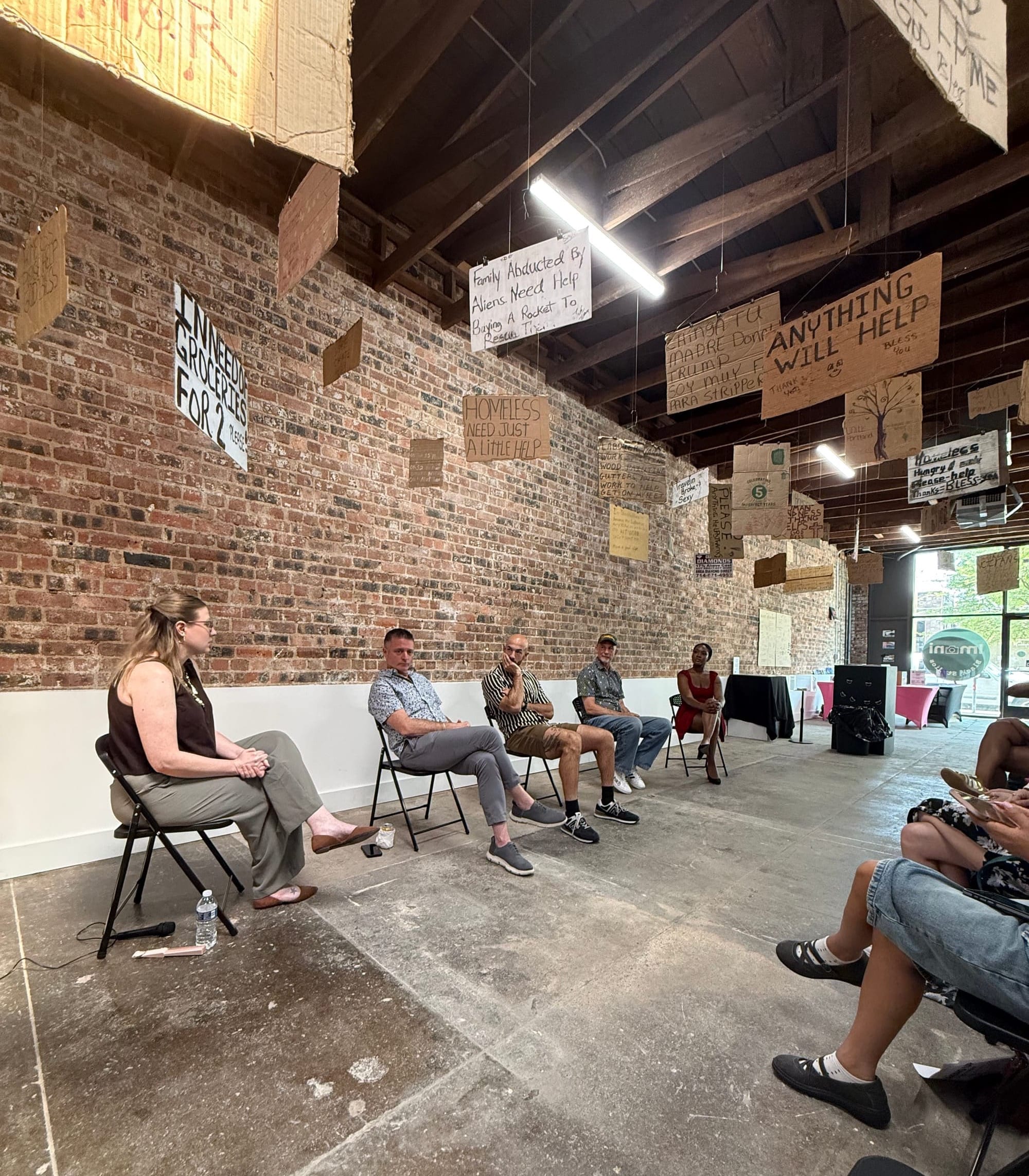
Art Y’all’s Michelle Green facilitated a panel discussion with artist Willie Baronet, who has been purchasing signs from people experiencing homelessness for the past 30 years, Jonathan Palant from Dallas Street Choir, Bryan Tony, director of Dallas Housing Coalition, and Imani Black, owner of Imani Black Studios.
I’m going to give you my personal takeaway, which only covers a snippet of the experience.
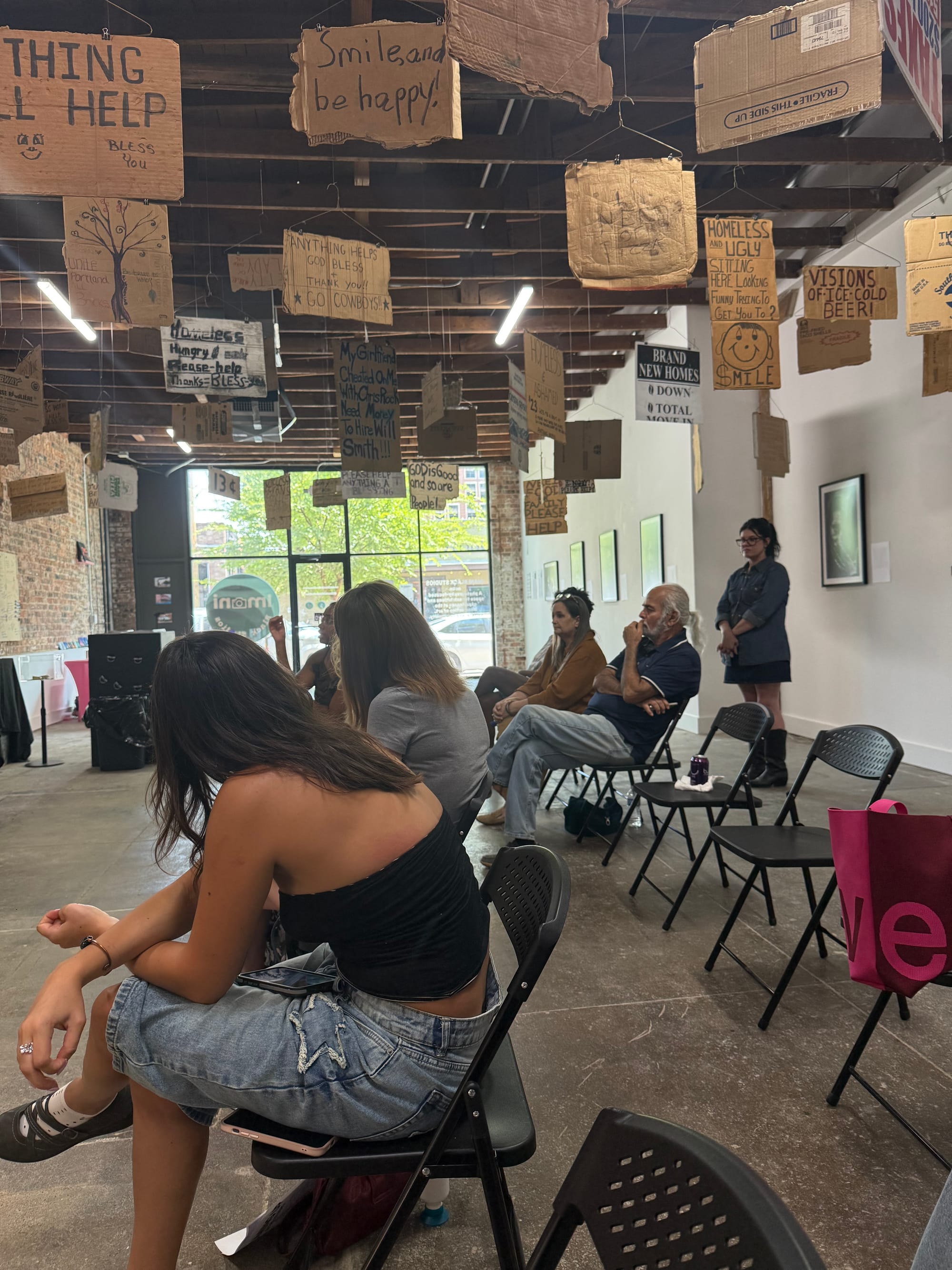
When I saw the signs, I recognized feelings within myself of discomfort and guilt. I thought about how I sometimes avoid eye contact with people experiencing homelessness out of fear, or because I don’t have cash ready to give.
Back in my late teens and early twenties, I used to say hello, even when I didn’t have money to give. I remember once after I rolled down my window, I told the man next to my car, “Sorry, I don’t have anything to give.”
He replied, “That’s ok, your smile is more than enough.”
Somewhere along the years I have become a bit more reclusive and scared of the world. I needed this discussion more than I realized. It opened up my eyes and heart to my community. A part of my community that is regularly isolated and ignored.
Here’s what I learned:
A smile and communication can go a long way. We are all closer to homelessness than we realize. Capitalism has created systems that can dehumanize people and place blame on individuals for homelessness when, in reality, the causes are much more complex.
Seeing the large number of people experiencing homelessness, and just the bleakness of the world in general, can also make me feel helpless. But in reality, there are many people active in our community who are creating real change. These people and organizations need our support, such as the Dallas Housing Coalition.
I have also been curious about the “Panhandling is Dangerous” signs that have popped up around intersections in Dallas. They always seemed kind of mean to me, but during the discussion I learned that they are intended to be helpful in a few ways. One is to encourage people experiencing homelessness to seek help from programs offered in Dallas. In addition, people who panhandle near traffic are at risk of being hit by cars, so the signs are also meant to help minimize that risk.
Lastly, I got very emotional thinking about my students who experience homelessness. Many times, schools are one of the few consistent places where children can receive a meal, feel cared for, and have access to opportunities they may not have elsewhere. It reminded me how important it is for me to continue loving and supporting my students however I can.
Here are some of the ways I learned we can get involved and help:
- Have water available to pass out.
- Wave, smile, say hello, or have a conversation.
- Volunteer. I’m excited to involve my son with volunteering in the future.
- Share what I know.
- Support organizations doing this work.
- Continue to love and support my students.
Much love, everyone. I hope this month’s newsletter was helpful to you. This experience definitely gave me a lot to think about, and I’m grateful I got to be there.
Until next time,
Monica